
Investors are keenly awaiting the announcement of the macroeconomic data-IIP and CPI due on Tuesday.

During April-May, growth in the eight core industries slowed to 3.3 per cent as against 4.9 per cent in the year-ago period.

There was more good news for the government on the economic front with the industry recording a 6.5 per cent growth for the first 10 months of the current financial year as against 5.7 per cent during the same period of last fiscal.

The growth in key sectors will have implications for the Index of Industrial Production as these eight segments account for about 41 per cent of the total factory output.

Cumulatively, the eight core sectors grew by 4.2 per cent in 2017-18, lowest in the last three financial years.

After contracting for two quarters in a row, the Indian economy entered the positive territory with a growth of 0.4 per cent in the October-December quarter, mainly due to good performance by farm, services and construction sectors, official data showed on Friday. Trade and hotel industry registered a contraction of 7.7 per cent during the third quarter this fiscal, as the sectors continued to suffer on account of coronavirus pandemic. According to the data released by the National Statistical Office (NSO), the farm sector recorded a growth of 3.9 per cent, and the manufacturing sector output grew by 1.6 per cent in the quarter under review.
The mining sector grew by 4.3 per cent in June as against a dip of 4.6 per a year ago.

'It appears the growth rate could be around six per cent'.

The new IIP numbers should spread cheer among those who were part of the Manmohan Singh-led United Progressive Alliance, earlier accused of having presided over a steady deterioration in industrial performance, particularly in the last two years of its tenure, says A K Bhattacharya.

India's gross domestic product product (GDP) growth rate between 2011-12 and 2016-17 should be about 4.5 per cent instead of the official estimate of close to 7 per cent, he said in a research paper published at Harvard University. "The Indian policy automobile has been navigated with a faulty, possibly broken, speedometer," he says in the paper.

The government is scheduled to release index of industrial growth for November and consumer price inflation for December later today.
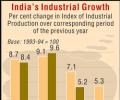
The Indian industry logged 8.5 per cent growth in October 2005, compared to 10.6 per cent in the same month last fiscal.
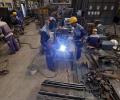
Industrial production rose 3.6 per cent in October, mainly due to better performance of manufacturing and electricity generation sectors, official data showed on Friday.

Industrial production grows at 2.1 per cent in March.

The eight core industries -- fertilisers, cement, steel, electricity, crude oil, coal, petroleum refinery products and natural gas -- have a combined weight of about 38 per cent in the Index of Industrial Production.

Electricity generation has outperformed the industrial production index for five months in a row this financial year, even as the broader economy is struggling to grow.

"The Index of Industrial Production (IIP) is expected to remain subdued and register below 5 per cent growth during the remaining months of FY'12 as production activity continues to be impacted by the slowdown in investment demand and the weak business and consumer sentiment," D&B said in the latest issue of its 'Economic Observer' report.

The manufacturing sector, which accounts for over 75 per cent of the total weight of the index, grew by just 5.6 per cent in May.

Capital goods output registered a steep decline of 16.5 per cent in June

Manufacturing sector production registered a decline of 17.1 per cent, while the output of mining and power fell 19.8 per cent and 10 per cent, respectively.

After 3 weeks of consecutive rally, this week was a breather for the index, which corrected by almost 1.5%.

Barring crude oil and cement, all other sectors recorded positive growth in November. In October, these core sectors' output had grown by 8.4 per cent. In February this year, the growth rate contracted to 3.3 per cent.

Industrial production surged by 13.6 per cent in June mainly due to a low-base effect and good performance by manufacturing, mining and power sectors but the output remained below the pre-pandemic level. The manufacturing sector, which constitutes 77.63 per cent of the Index of Industrial Production (IIP), grew by 13 per cent in June this year, according to the data released by the National Statistical Office (NSO) on Thursday. The mining sector output rose by 23.1 per cent in June while power generation increased by 8.3 per cent.

India's manufacturing sector witnessed a modest growth in May, but going ahead "weak demand conditions" may persist.
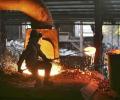
India needs to revive corporate sector investment, push critical reforms and remove infrastructural bottlenecks to boost industrial growth in the country, says a government document.

For the entire 2015-16 fiscal, the factory output grew at 2.4 per cent, down from 2.8 per cent in the previous fiscal.

India's gross domestic product growth, which had fallen under 5 per cent, is expected to be between 5.4 per cent and 5.9 per cent this fiscal.

Sandwiched between demonetisation, GST and other smaller policy changes, Gross Value Added or GVA may be a more reliable measure of economic activity over the next few quarters.
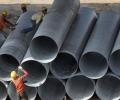
The festive season will mean business for the steel industry as it is the time when automotive and consumer appliance companies bump up demand to prepare for higher sales, experts have said. Ranjan Dhar, chief marketing officer at ArcelorMittal Nippon Steel India (AM/NS India), said that bookings by auto and consumer appliance industries are 20 per cent higher ahead of the festive season compared to last year. "While this could be for a couple of months, it could normalise later at approximately 10 per cent," he said.
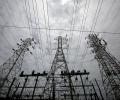
The output of eight core sectors jumped by 56.1 per cent in April mainly due to a low base effect and uptick in production of natural gas, refinery products, steel, cement and electricity, official data released on Monday showed. The eight infrastructure sectors of coal, crude oil, natural gas, refinery products, fertilisers, steel, cement and electricity had contracted by 37.9 per cent in April 2020 due to lockdown restrictions imposed to control the spread of coronavirus infection. In March this year, the eight sectors had recorded a growth rate of 11.4 per cent.

The output of eight core sectors rose 4.4 per cent in September on account of healthy performance by segments like natural gas, refinery products and cement, official data showed on Friday. The eight infrastructure sectors of coal, crude oil, natural gas, refinery products, fertilisers, steel, cement and electricity had grown by 0.6 per cent in September 2020, as per the data released by the commerce and industry ministry.

While the positive surprise has been the high growth in agriculture, the negative surprise is in the trade, transport, hotels segment where growth came lower than expected, says Madan Sabnavis.

Contracting for the ninth consecutive month, the output of eight core infrastructure sectors dropped by 2.6 per cent in November, mainly due to decline in production of natural gas, refinery products, steel and cement. The production of eight core sectors had recorded a growth of 0.7 per cent in November 2019, data released by the commerce and industry ministry showed on Thursday. Barring coal, fertiliser and electricity, all sectors -- crude oil, natural gas, refinery products, steel and cement -- recorded negative growth in November 2020.
Industrial production growth entered positive territory after a gap of two months with a record 22.4 per cent rise in March this year, mainly due to the low-base effect and good show by manufacturing, mining and power sectors. The manufacturing sector -- which constitutes 77.63 per cent of the index of industrial production (IIP) -- grew by 25.8 per cent in March 2021, as per the data released by the National Statistical Office (NSO) on Wednesday. The mining sector output too grew 6.1 per cent in March, while power generation increased by 22.5 per cent.

Domestic stock markets would be driven by inflation numbers, global trends, and the last batch of Q4 earnings this week, analysts said. Markets will also react to industrial production data and consumer inflation numbers that were released after market hours on Friday. "Participants will react to macroeconomic data viz. IIP and CPI first, which were released post-market hours on Friday.

The ministry of statistics and programme implementation on Friday released quick estimates of the Index of Industrial Production (IIP) which showed the index value at 88.4 in May against 53.6 in April, indicating a graded pickup in industrial activity. The index stood at 135.4 in May 2019.

From the Sensex pack, Infosys, HCL Technologies, Infosys, NTPC, Mahindra & Mahindra, Tata Consultancy Services, Nestle, Tech Mahindra and Bajaj Finance were the major gainers. Power Grid, Larsen & Toubro, Maruti, Titan, HDFC Bank, Wipro, HDFC and ITC were among the laggards.

Global markets trends, inflation, release of industrial output data and quarterly earnings will dictate movement of the equity benchmarks this week, analysts said, adding that volatility might continue amid slew of announcements of macroeconomic data at the global level too. Moreover, foreign fund movement, crude oil prices and trend in rupee would also act as major drivers for the equity market, they added. "The direction of global equity markets along with movement in dollar index and crude oil prices will continue to dominate while inflation numbers of the USA on May 11 and inflation and IIP numbers of India on May 12 will also cause volatility in the market," said Santosh Meena, head of research, Swastika Investmart Ltd.

CPI inflation could fall marginally but stay above RBI's comfort level.
While the manufacturing sector grew by 13.3 per cent during the month, the performance of the mining and electricity sectors remained poor at 3.7 per cent and 4.2 per cent respectively, said the Index of Industrial Production released by the government on Wednesday.
